The tiny musings found below will perhaps provide you an opportunity to pause and reflect on our world and our place in it. You can subscribe to receive posts in your inbox (approximately once a week)! Note: all writing and art is © Christopher Buddle.
-
Spring chorus
hopping for love
with a deafening chorus
wetlands come alive
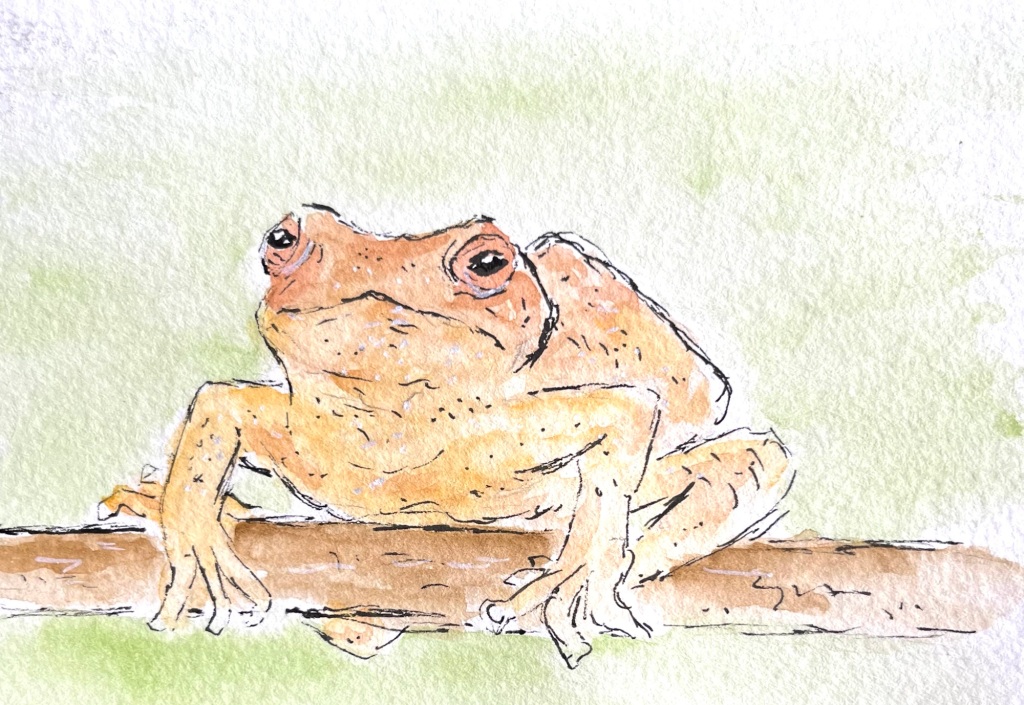
There are many signs of spring to celebrate (I’ve written about this more than a few times, including posts about geese, turkey vultures, and more!), but another one of my favourites is spring peepers. Or, rather, the noise that these tiny frogs can make. In my neck of the woods, it’s right around now that the chorus is Full On and Loud (here’s a YouTube video that makes the point). It’s all about mating, of course, and the singing of these amphibians is for love. I have friends who have wetlands on their properties, and they tell me how these critters can be so loud that it can disrupt a good sleep! They sure can sing, sing, sing.
Oh, HAPPY EARTH DAY too 🙂
© Christopher M Buddle 2024
-
Book Announcement – Portraits of Nature
I am excited to announce today that a two-plus year project has finally seen the light of day.
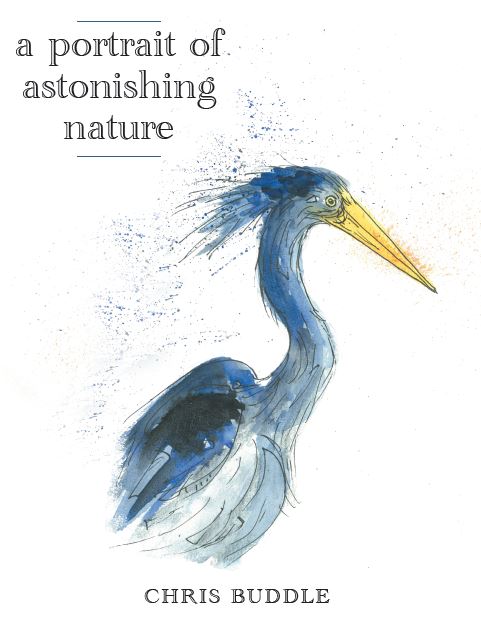
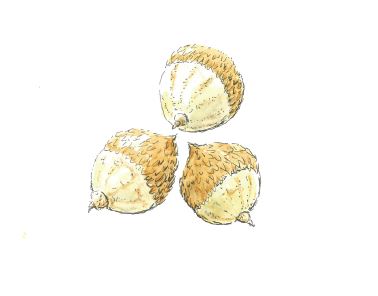
In A Portrait of Astonishing Nature whimsical pen and watercolour artwork is paired with haiku to depict 53 plants and animals found in Quebec and surrounding areas. From darting dragonflies, to magnificent pine trees, mythical snapping turtles, elusive moose, and sleek tree swallows, readers will be enthralled and inspired by the beauty of nature. This book is accessible to a range of audiences, from the nature-enthusiast to armchair biologist, lover of poetry and watercolours, and for anyone who cares about the world’s biodiversity.
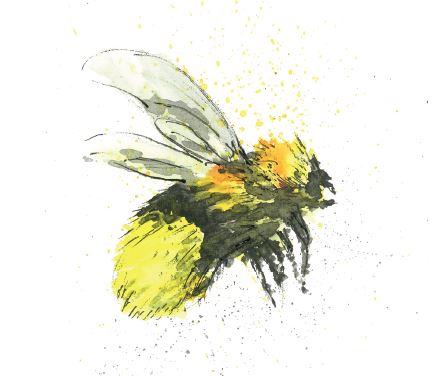
Proceeds from the sale of the book will support a Conservancy Land Trust called Creek 53, located in the western part of the town of Hudson, Quebec (I have written about it before). It is a wild, and beautiful place. It contains old-growth and secondary forests, meadows, agricultural lands, wetlands, small ponds, and creeks. It is home to a plethora of species – over a dozen different kinds of amphibians and reptiles, over 60 tree species, 150 or more plant species, and over 180 bird species, and hundreds of insects and spider species. All these species are all being preserved in perpetuity for future generations. The 53 species depicted in the book occur within this Land Trust.
The book is now available through Friesen Press, and will soon be widely available on Amazon, etc. I will be doing events and book-signings in Montreal later in May, and closer to Creek 53 in June. You can bookmark this website for updates.
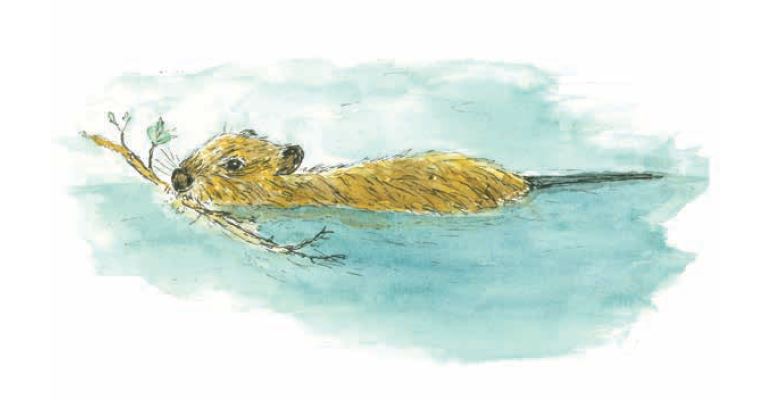
I must also thank so many people who have supported this work, first and foremost the Creek 53 Trustees, but also my family (they were so patient, especially when I spend a very significant part of my holidays last summer truly obsessed with finishing up watercolours – the dining room table was covered with art supplies for weeks on end…). It’s been a wonderful project and I am grateful for being able to complete it. And, thank YOU for following, and I hope you consider buying the book, which in turn will help to preserve biodiversity.
© Christopher M Buddle 2024
-
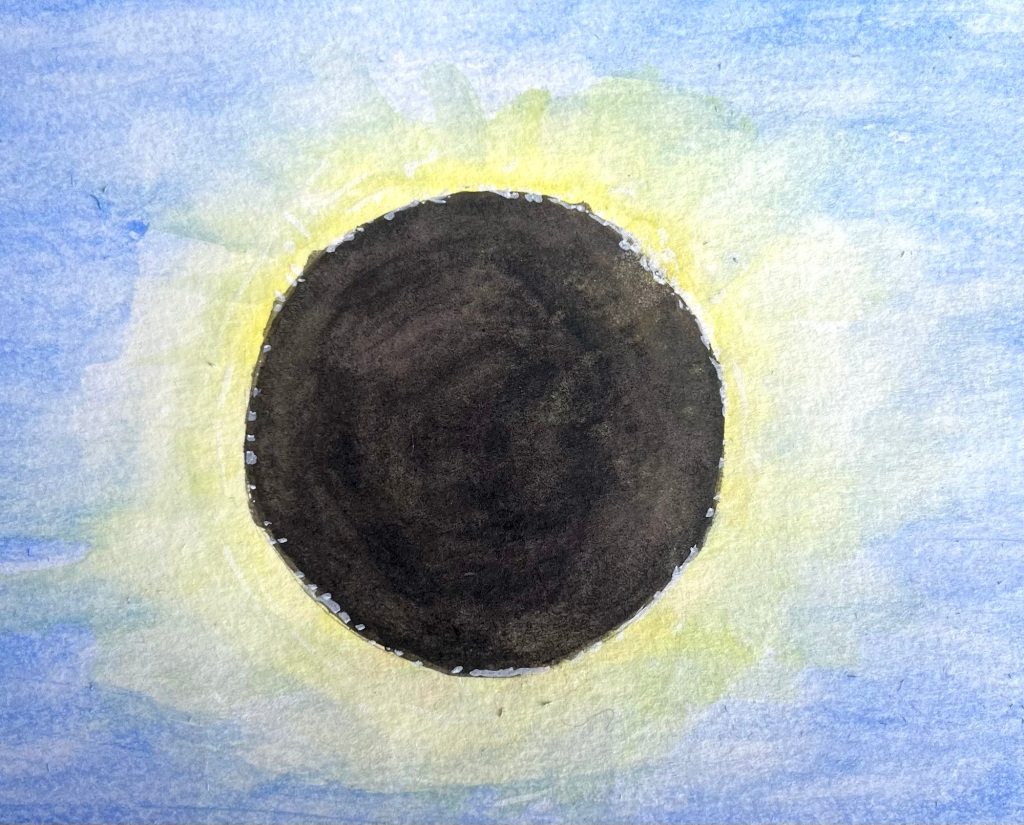
Totality
night during day
a great celestial pause
the light returns
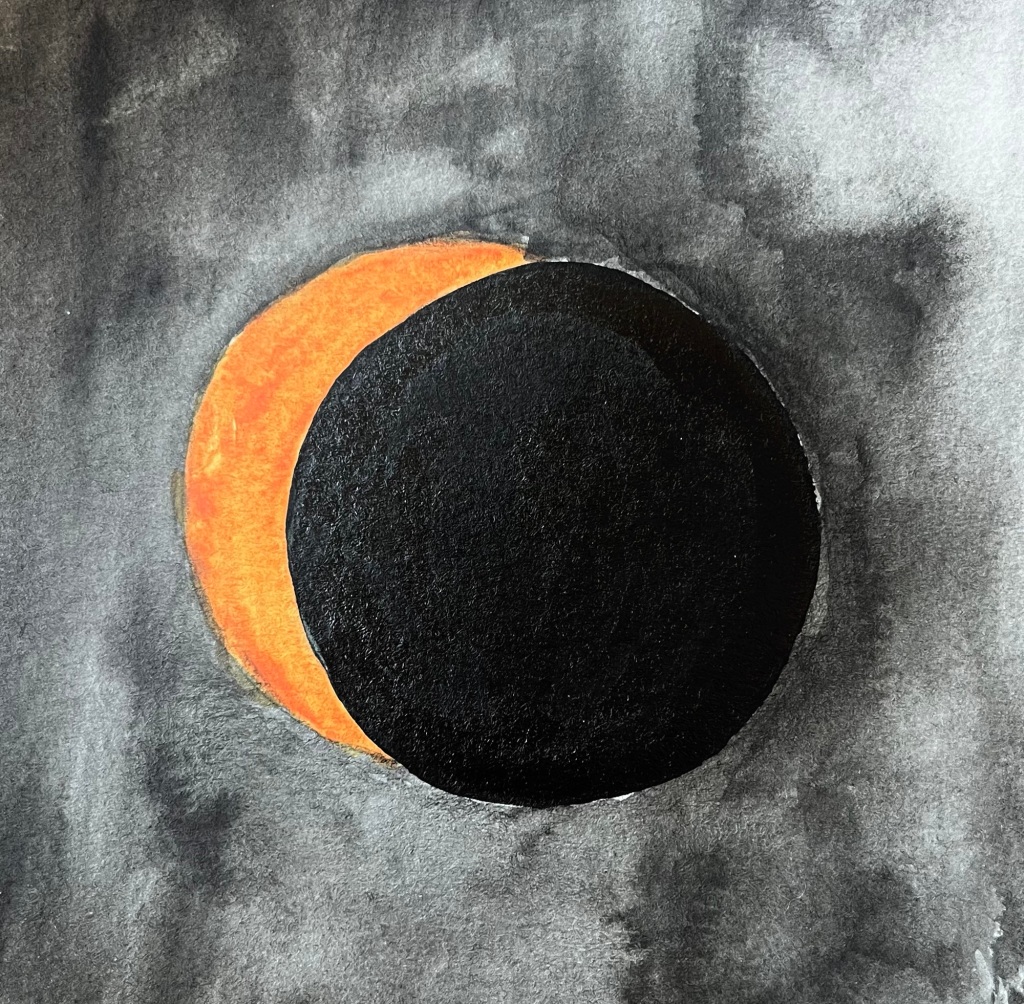
I know I usually post Mondays, but I decided to wait and honour the eclipse from yesterday. It was a truly rare and spectacular event, and Montreal (at least the southern part of the city) was in the path of totality (we experienced about a minute and half of the full eclipse). And the weather was perfect.
The experience was incredible, Nighttime during daytime. A noticeable temperature drop. A mix of people hushed and people clapping and shouting in glee.
Life is busy, people are overwhelmed, stressed, and society at large is in a rough patch. So, taking a pause during the eclipse, and bathing in awe and wonder, was needed, valued, and valuable. We stood together, as a community.
The next full eclipse in my part of the world will be long after I’ve returned to stardust.
So it goes.
-
Cradle Mountain
mountain emerges
under the southern cross
a forever place

This watercolour is very small in size, as can be seen by the paper’s patterning. It did not reproduce well online and I could not scan it again since the original was sent to my friend earlier this year! Notes: A while back a friend* of mine send me a photo of Cradle Mountain, in Tasmania. He had visited there during a trip last year. I had asked my friend about whether he visited any locations on that voyage that were places he could imagine living forever. He described the bucolic setting within “The Promised Land” – looking across pastures to Cradle mountain. Peaceful, beautiful, calm.
He sent me a photo of the view from his lodging and my artwork above was my attempt to recreate it. It’s sometimes interesting to try to capture a location or landscape for which there is no personal reference point. Because I have never been to Tasmania, I simply cannot base the artwork on anything other than the reference photo.
Someday I would like to visit the pasture that is nestled up against Cradle Mountain. Maybe it is indeed a forever place, or the promised land**. I guess even if I don’t visit it, I can close my eyes and take myself there. Feeling the softness of a light summer breeze, the gentle rustling of leaves on a nearby tree, and birdsong in the distance.
The power of the human mind is imagination.
*I met my friend only once, briefly, at an event in Montreal. We hit it off tremendously well in less than an hour we spent together. We have, in the two(+) years since then, become penpals. That is pretty special, and my life is richer for this friendship.
**while I realize this is a biblical reference, I am really referring to this in a spiritual rather than religious sense. Speaking of religion, this post is on a Tuesday since this past weekend was the Easter weekend.
© Christopher M Buddle 2024
-
Pinus strobus
taller, stronger
weathering the decades
with outstretched arms

As I think back to my childhood, fishing and canoe-camping on remote lakes in Canadian-shield country, I realize eastern white pine trees (Pinus strobus) have always been my friends. They have always been my favourite tree
Eastern white pines are magnificent, standing tall and growing from seemingly inhospitable rocks on small islands in the Kawartha Highlands (this was not a park when I was a child). Or, locally where I live now, I see them lined up along areas that are well drained- sandy ridges left over after the glaciers retreated thousands of years ago. White pine trees tell us about the land.
battered giant
rising from the granite
watching over all
There is an eastern white pine growing tall between our home and our neighbours, so I get to say hello every day. It’s been pretty beat up over the years, but still weathering high winds, snow, and changing seasons.
Some of my favourite Canadian art includes pine trees, and I have noticed that these trees can be captured perfectly with minimal brush strokes. I took me more than minimal brush strokes to do the artwork, above, but I will keep practicing.
They are, quite simply, stunningly beautiful trees.
© Christopher M Buddle 2024
art, Canada, Canadian shield, drawing, forests, ink, Landscape, nature, pen, poetry, tree, trees, Watercolor, Watercolour, white pine -
the return
snowbirds
honk honk, friends in the sky
– welcome home

Notes: late winter/early spring is a spectacular time of year, whether for maple syrup or the return of spring migrants. I love walking outside and hearing the distant sound of geese, high above and far away. It gets louder louder louder and then the distinctive V-pattern appears, and the chorus of honks is right overhead. I do consider that these ‘snowbirds’ (i.e., winter in the south, return north in the spring) have a true home in the north. And I welcome them home with open arms.
© Christopher M Buddle 2024
-
Syrup Season
warm March days
sweetness of the season
sugaring off

It’s the season here in the north* when maple trees are adorned with steel buckets, and the sap flows. This winter has been very warm, and the snowmelt unseasonably early – while we still have some patches on the lawn, there is bare ground in most areas. In my town, many locals tap maple trees and collect sap. Warm days and cool nights is when the sap starts to flow, and after it’s collected, it can be boiled down (‘sugaring off’) to make maple syrup. On the weekends, some of my neighbours make this a truly community affair, and their driveway is a social hub and the locals all gather around the old stove that boils down syrup for hours on end. It’s a great time of year, and local maple syrup does make pancakes taste better.
*north is a relative concept, of course! But for many, Montreal is a northern area, and it’s certainly a perfect location for serious maple syrup production!
© Christopher M Buddle 2024
art, drawing, Haiku, maple syrup, maple tree, March, nature, Quebec, spring, sugaring off, tree, trees, Watercolor, Watercolour -
Spring Training
under Florida sun
full count, fastball, swing and hit
home run for the fans

the grapefruit league
innings stretch forever
meditation in the sun

Last week I went to Florida for a few days, with my eldest son. Our goals were twofold: enjoy some warmth and sunshine, and watch some baseball. It’s spring training season with Major League Baseball, and our favourite team*, the Toronto Blue Jays, train in the grapefruit league in Florida, and we stayed in proximity to Dunedin, where the Jays train. We enjoyed ourselves immensely, and the baseball was terrific. Spring training games are serious enough to be interesting, the stadiums intimate, and the fans in immensely great moods.
I could write a LOT about why I love baseball so much, but I will try to keep it brief. Baseball is a sport of contrasts and is exhilarating because of that: long periods of relatively slow play contrasted by intense speed and activity. It’s a sport in which some innings go by in a matter of minutes, and others stretch on an on and on. It’s a game with no fixed end-time. Its units of play, innings, are variable in length. It’s a remarkably simple sport (pitch, hit a ball, run) yet also incredibly complex (pitch types, bullpen, utility players, designated hitters, statistics).
Baseball is also a sport that, for me, is meditative. During a lazy summer Saturday afternoon, I sometimes find myself dozing off to a game, listening to the play-by-play, hearing perfect fastball contact a perfect swing. My breathing slows. I calm down. I relax. When seeing a game live, time takes on a new meaning. It slows down, changes, and it’s almost as if you exist within a bubble or island outside of the rest of the world. Finally, there is a rich history, statistics, storylines. This is all rather romantic and for non-baseball fans, I realize this makes little sense! I certainly won’t try to convert anyone but just wanted to share my own thoughts.
Finally, and perhaps this is self-evident, but baseball is also something I can enjoy with my son. The beauty and joy of that is beyond words.
*in addition to the Jays, my other favourite teams in the MLB include the Twins, Reds, and Phillies. This year at spring training we watched the Jays play the Phillies, the Phillies play the Yankees, and the Jays play the Pirates.
© Christopher M Buddle 2024
-
The alley
vertical light
staircase silhouettes
– alley cat

I walk by many alleys each day as I head from my commuter train to work, right through Montreal’s downtown core. I walk past narrow alleys squeezed tightly between skyscrapers- barely wide enough for a delivery truck- or larger alleys filled with recycling bins, detritus from restaurants, and multiple parking spots. Some alleys include exterior staircases to upper floors, some are adorned with graffiti. Some include people, animals. Most have piles of garbage or detritus about, often carried upwards with a gust of wind.
Alleys exude a sense of secrecy. They are private places yet fully accessible. They are invisible places to those hurrying by on the sidewalks. People do not notice alleys. If we are to believe crime shows, nefarious activities are common in alleys.
I am intrigued by these places and always try to pause and observe these narrow, tall, urban features. They are fascinating and, in their own way, special.
Note: I’m away next week, so your next post won’t arrive until early March.
© Christopher M Buddle 2024
-
Squirrel!
looking busy
a dignified fluffy tail
lost the nuts (again)

Squirrels (meaning the eastern grey squirrel in this case) are extremely common in my region. They are always out and about, all year round, with their distinctive fluffy tail, searching for things to eat, caching said treats, and then often forgetting where the cache was hidden. And while grey squirrels are generally grey throughout a lot of their range, the black forms are everywhere here in the Montreal region, including my yard. From my reading, it seems northern populations of grey squirrels have more black forms, and such colouration reduces heat loss, which makes sense given our winters.

What impresses me so much about squirrels is just how busy they always are. Up and down trees, across hydro wires, running across the yard, and sitting in shrubs and hanging out under thickets. Busy busy busy. It’s no wonder that they drive dogs so crazy. One of my favourite characters in animated movies is Dug the Dog in “Up” – this scene is just perfect.
I realize squirrels drive some people, and dogs, crazy, and they can be a nuisance at times (especially if they end up living in a chimney, or end up inside a house!). But if you just sit back and watch them, I know it’s possible to appreciate them in all their furry glory.
© Christopher M Buddle 2024
 Nature's Reverie