
Fleeting splash of red
Seeking food and shelter.
Uncommon, scarce, gone.
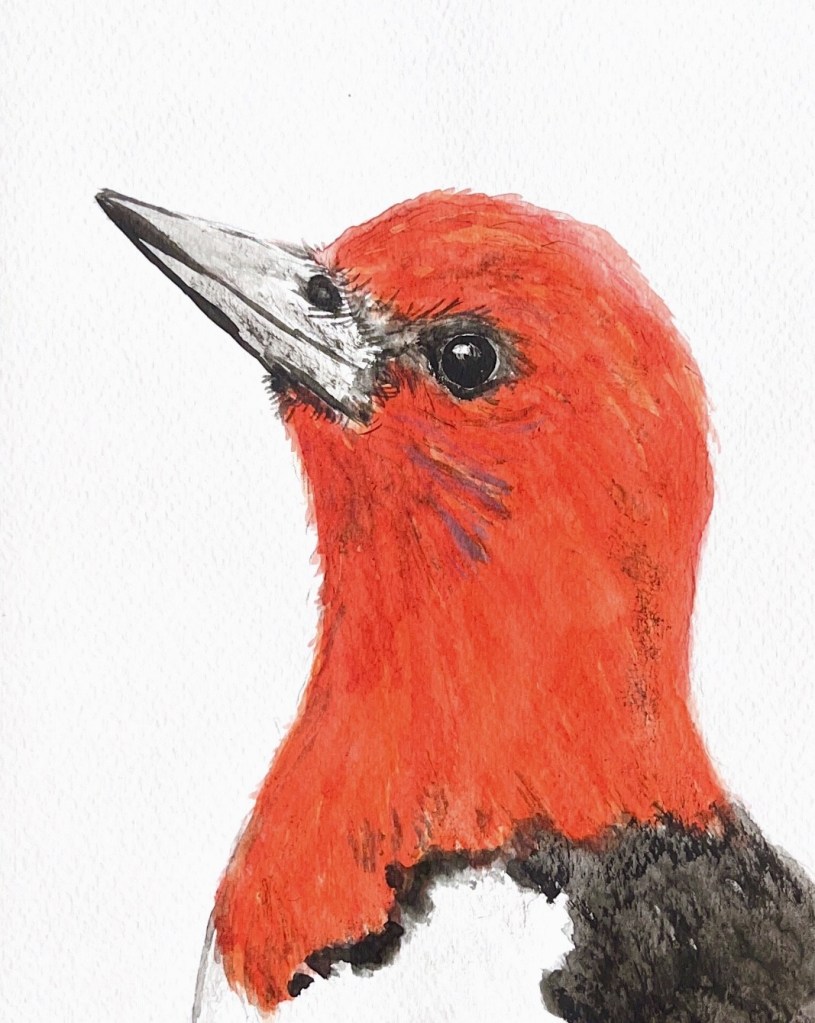
Red-headed woodpeckers are wonderful birds, but I only know this through photos and stories since I have never seen one*. While their range does get into parts of Ontario and Quebec, they are rare in my corner of the world. These woodpeckers certainly eat insects and drill into dead wood like their cousins, but they also eat fruits, nuts and acorns, and seeds, so they are quite an omnivorous woodpecker.
Red-headed woodpeckers are in trouble: they have been experiencing populations declines for decades. The declines are likely due to many factors – one of the main ones being loss of habitat for their nests: they need dead trees (or snags) to nest in, which has become a limited resource. Their declines may be due to changes in the production of nuts/acorns over the years – whether declines of chestnuts after the Chestnut blight, or the unpredictability of mast years (years of high nut production) or changes in forest composition**. There is also some evidence of (invasive) European starlings kicking woodpeckers out of their nests. The starlings like the holes in snags, but can’t make them on their own. Whatever the cause, the numbers speak for themselves.
Conservation starts with education and awareness. We have to understand our world’s biodiversity, and protect it. So, share this post through your networks! Spread the word about these magnificent birds.
* the watercolour depicted above was done from a reference photo
** here’s a link that delves into the reasons for their declines: https://www.audubon.org/news/the-red-headed-woodpecker-doesnt-make-sense
© Christopher M Buddle 2023
 Nature's Reverie
Thanks , always something to learn !
LikeLike