The tiny musings found below will perhaps provide you an opportunity to pause and reflect on our world and our place in it. You can subscribe to receive posts in your inbox (approximately once a week)! Note: all writing and art is © Christopher Buddle.
-
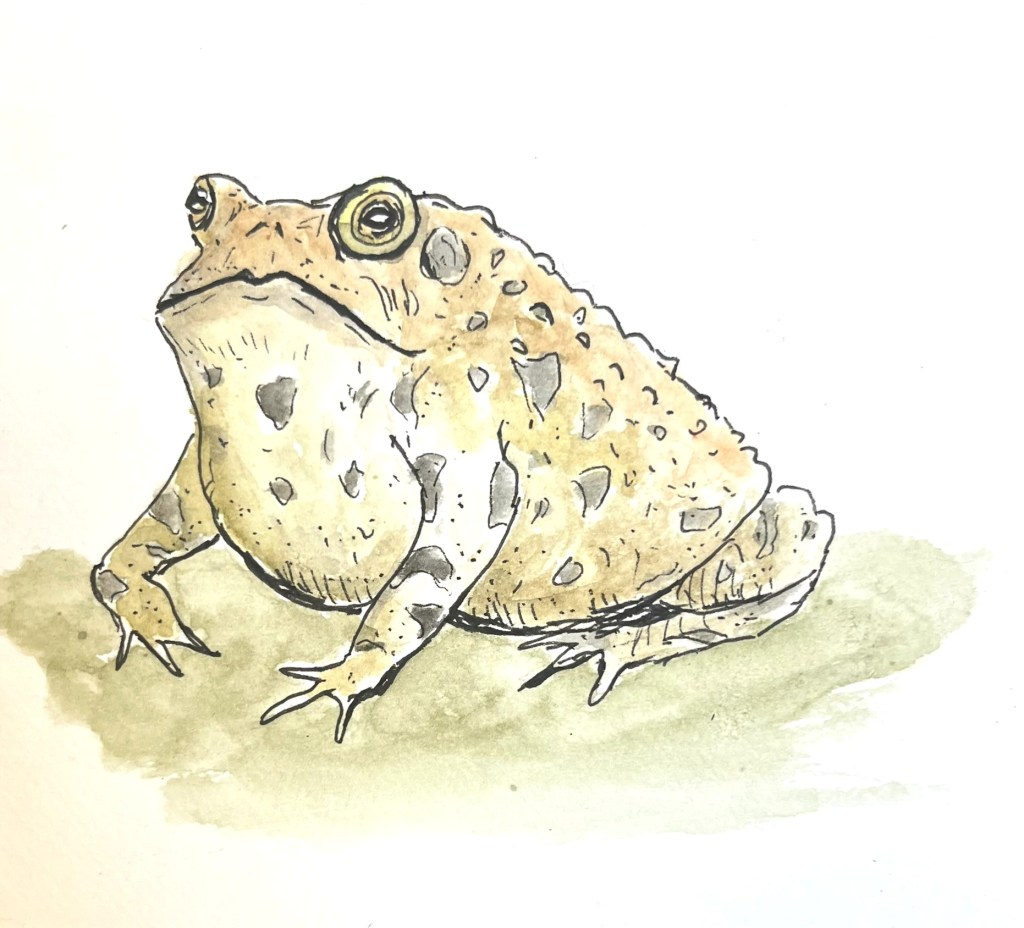
toad friend
autumn frosts
the toad starts a slow dance
rest, old friend, rest
© Christopher M Buddle 2025
-
Vernissage: Birds, Buddies, and Beer
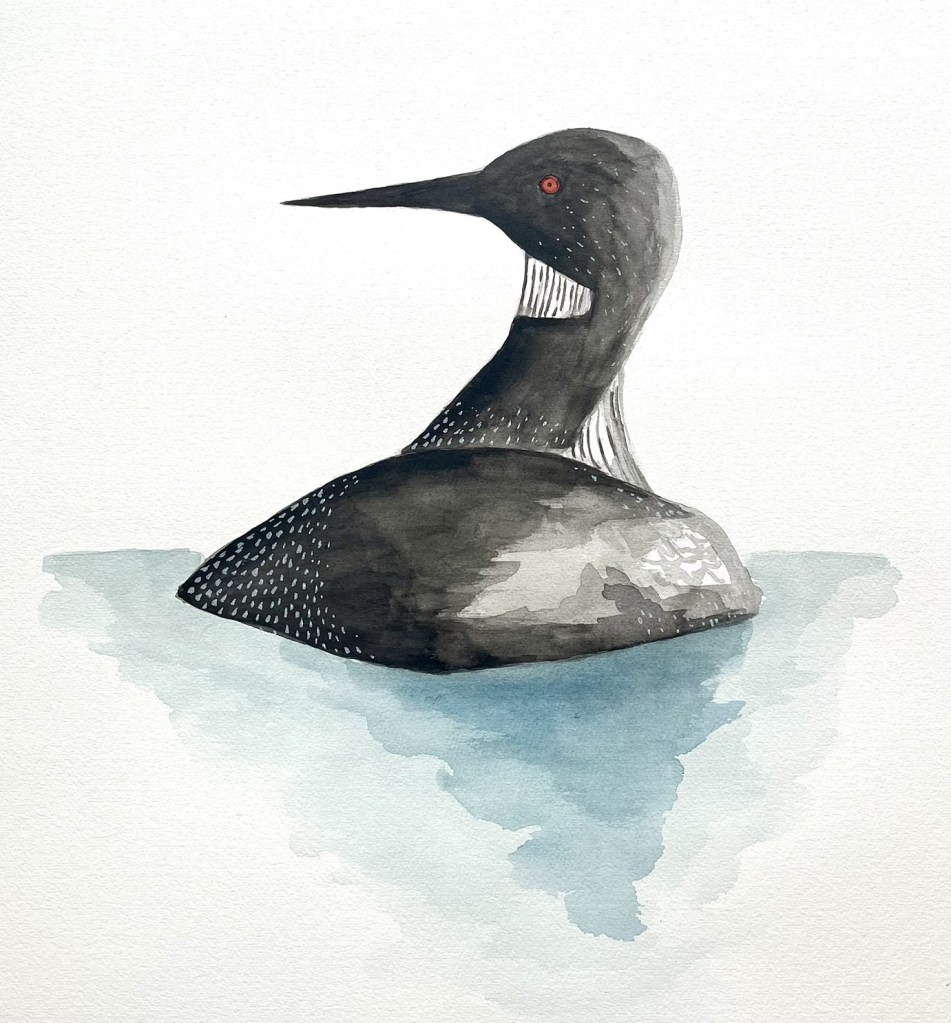
Enjoy some art! Hang out with your buddies! Grab a beer!
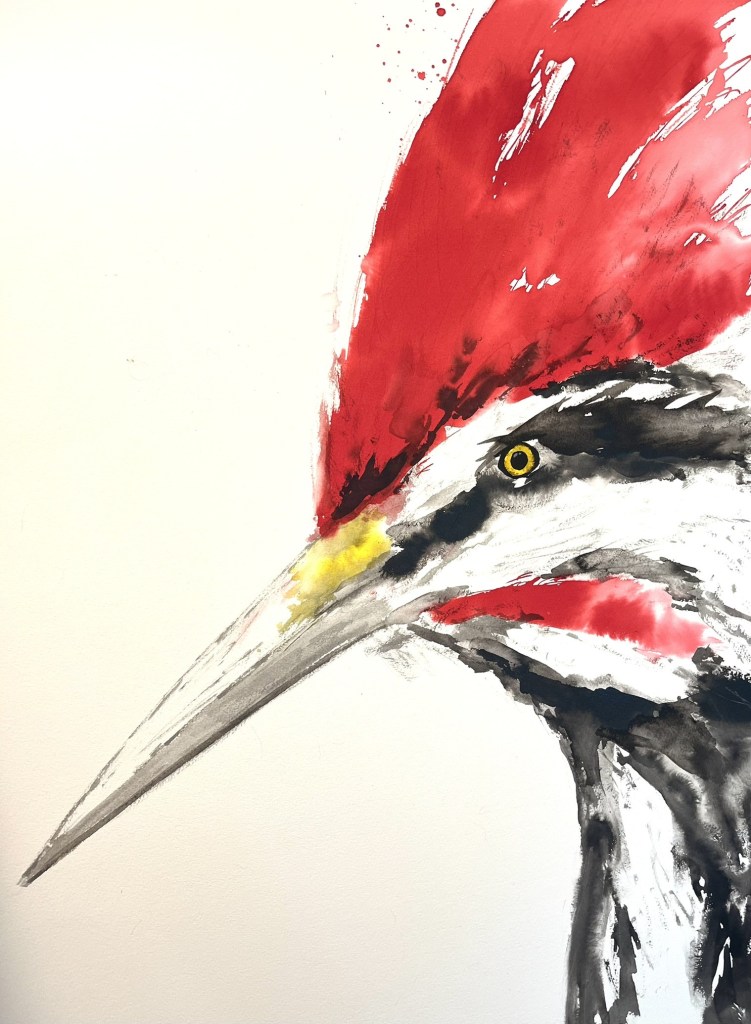
I’m happy to announce today an upcoming ‘beernissage’ at a local microbrasserie. I will be co-presenting art alongside a friend. Birds, for me, portraits and landscapes for Paul (some examples of both are here in the post!).
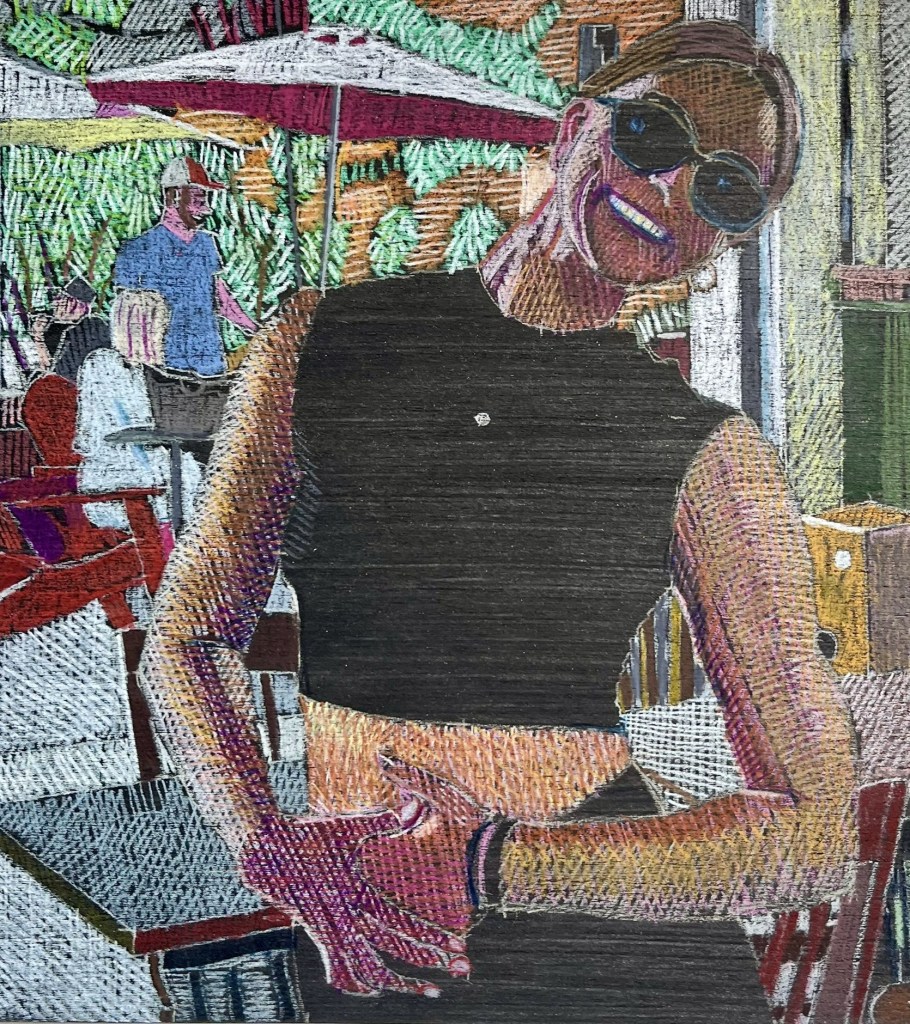
An example of Paul Gelinas’ work Most importantly, however, is that the sales from all the art will go directly to Creek 53 – the local conservancy land trust I am involved with. Anyone who buys the art will be directly contributing to the protection of wild lands and the biodiversity therein.
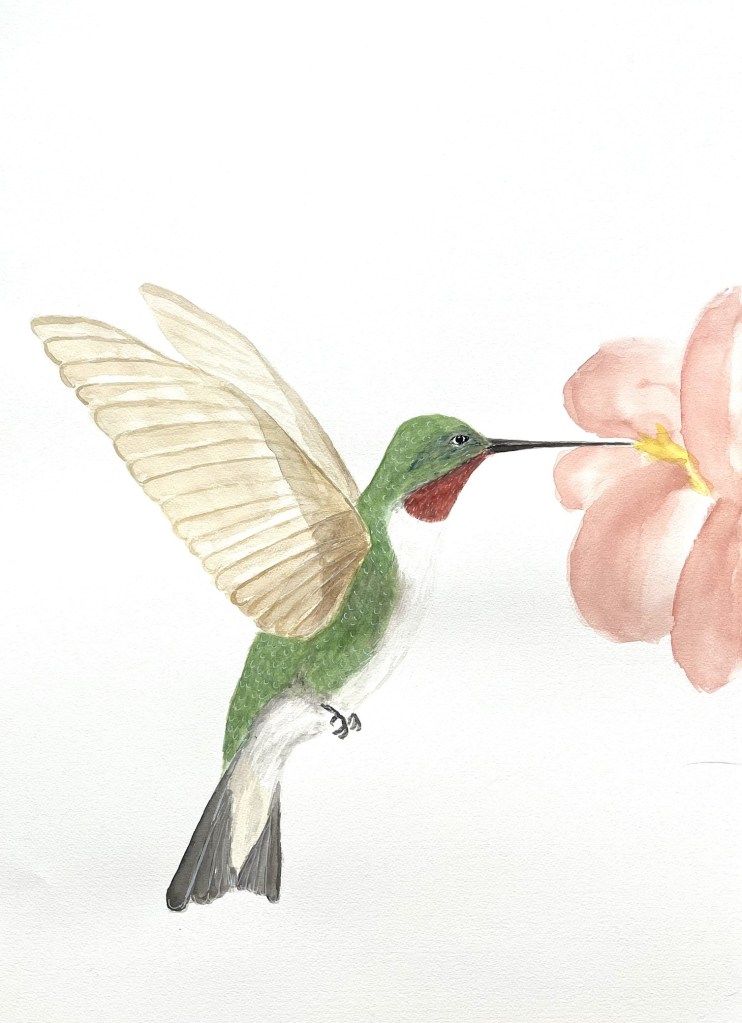
The vernissage will be on 16 September at 7 PM at Cardinal Brewery (466 Main Rd, Hudson QC) but the art will remain on the walls of the brewery from now until sometime in December, so you can stop by anytime in the coming months if you happen to be in Hudson, Quebec (which, by the way, is a charming small town!).

PS if you like the art, I’m always open to special projects and commissions – reach out if you have questions!
PPS yes this is the Big Project I mentioned in my last past – I’ve been so busy doing larger format (28″ x 20″) watercolours for this show.
© Christopher M Buddle 2025
-
Cats, dogs, bugs, birds, and frogs
the creative process
meandering, lost, sometimes found
days become life
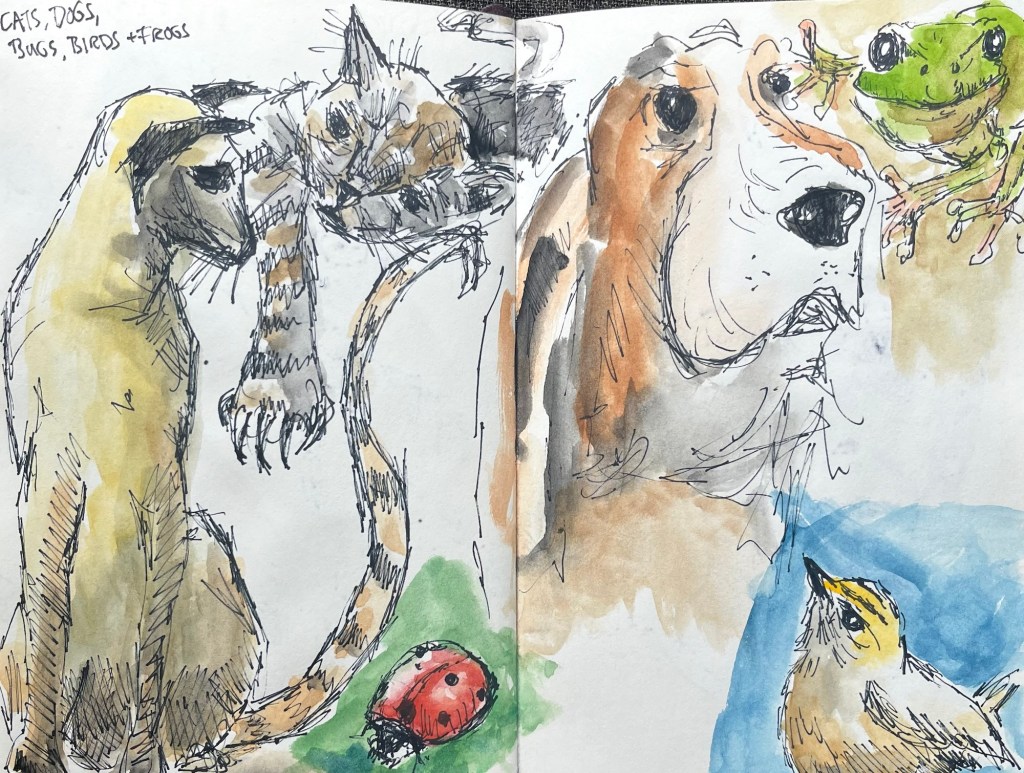
I have been reflecting on the creative process recently – in part because I’m deep into a Major Project (you will learn about it soon!), and also because I have been flipping through old art journals (the art, above is from one a few years ago – I love the title “Cats, Dogs, Bugs, Birds, and Frogs”). I remember doing those pages in the journal, and remember it being fun and energizing.
But at other times the creative process is a slog. And while my one Major Project is going well, there is another one that I am completely stalled out on (and it’s been on my list for months). I keep trying and I am never happy with the end product. I’ve restarted it a dozen times, to no avail.
This has me once again assessing how and when to find energy for art and writing – but more precisely – when the creative process is fun and end-product is something I like! The entire process is difficult to define. Glancing through Rick Rubin’s “The Creative Act: A way of being” helps a lot. The books is a wonderful reminder about how being creative can be playful and fun, but also is never linear or predictable. It is about just doing it, and not being obsessed with an end product, or a specific project. Doing what feels right instead of forcing the act. Pay attention, be open, and lean into it.
I especially like Rick Rubin’s list of things that are not conducive to the work (meaning, the things that go against fulfilling creative work). The list includes “Believing you are not good enough”, “Never finishing projects”, “Impatience”, “Believing a certain mood or state is necessary to do your best work”, and “Abandoning a project as soon as it gets difficult”. These are powerful reminders, and illustrate the strength and power of negative vibes.
I am too stuck on the end product, and too stuck on my own assessment of a work’s quality. I’m sure many of you feel this way too, whether it is with creative work, ‘regular’ work, or in your relationships with others. “I can be better”, “I did that wrong”, “They will think poorly of me”, “I am not worthy” etc. Indeed, lessons from The Creative Act are applicable to so many facets of life.
What to do, then, when feeling stuck or unsure of next steps?
This is the big question, and turning to Cats, Dogs, Bugs, Birds, and Frogs for clues is key, at least for me. Just do stuff. Just make it messy, have fun, and don’t overthink. One pencil line, one sentence, or one wash of watercolour is the step to take. You need not think of the next dozen steps. It starts with one.
I think often of the writer Annie Dillard’s famous line “How we spend our days is, of course, how we spend our lives”. This means different things to different people, but when putting it in the context of creative work, the small acts that you take will sum up to great things. Take pleasure in the small moments of time you find for creativity and a fulfilling life as an artist will follow.
© Christopher M Buddle 2025
-
summer landscapes
chartreuse landscapes
distant hills and valleys
wonder, wander
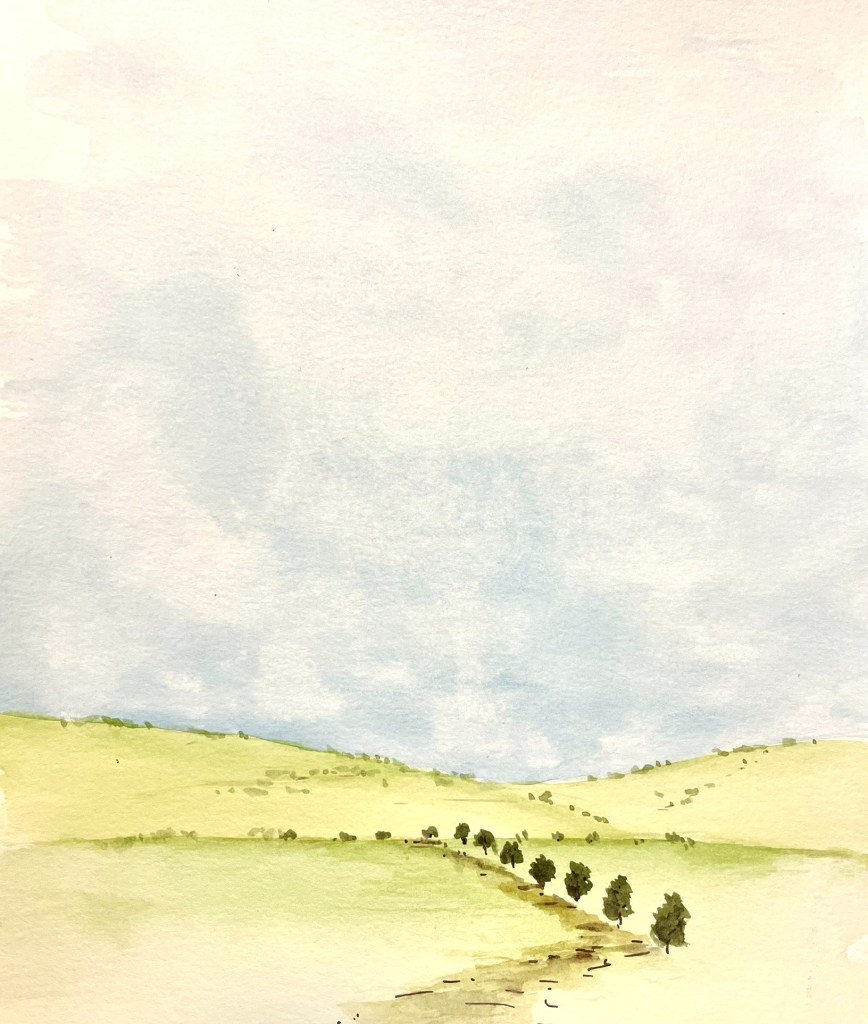
It’s dry, hot, and the fields are parched. The lush greenness has left the landscapes, turning to browns and yellows. It’s late summer, and the land is telling us that fact. What will you wonder about as you wander this August?
© Christopher M Buddle 2025
-
Blueberries
gifts from the land
multitudes of blue hues
spheres of perfection
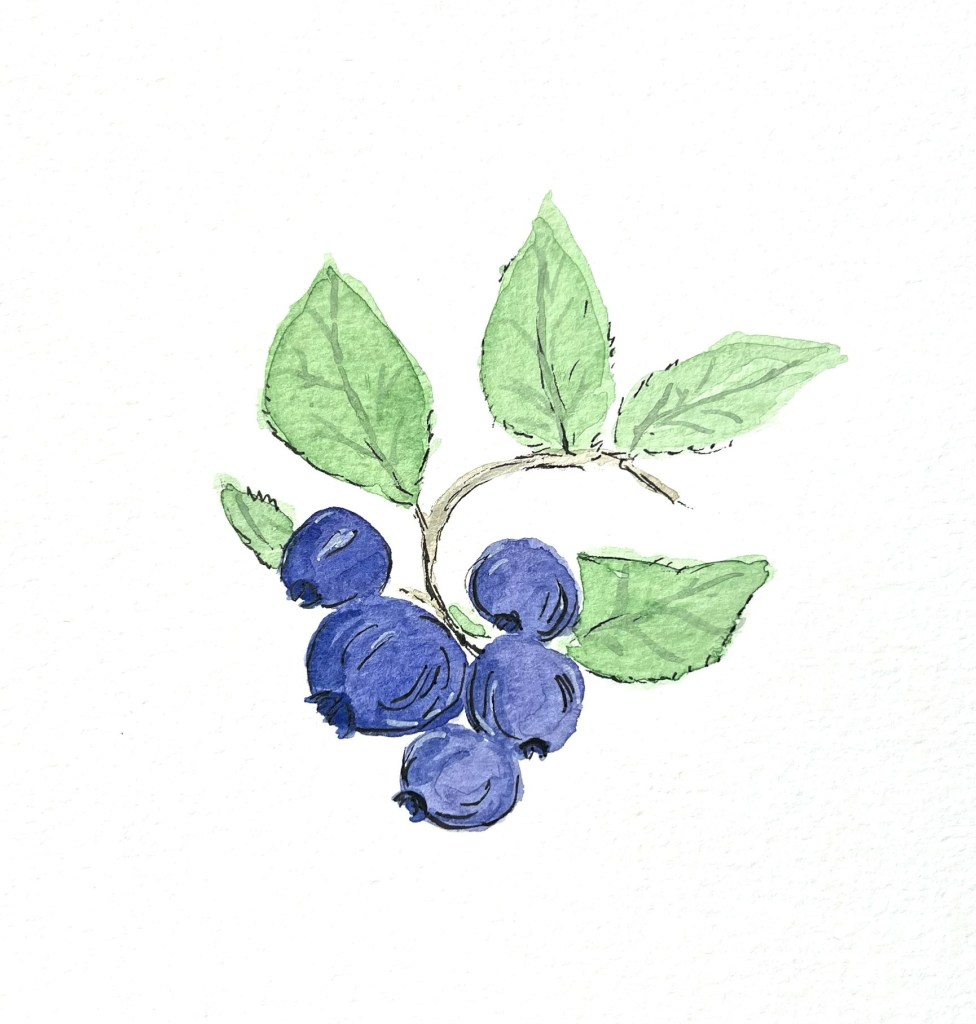
Summer fruit is the best, whether peaches, strawberries, or the overall winner: blueberries. Highbush, lowbush, from a fruit stand, your grocery store, or hand-picked, they just rock. I especially like the tiny wee ones that just barely scrape out a living in northern Canadian shield landscapes. They have just that right combination of tart and sweet. And wild blueberry pie? Oh my.
© Christopher M Buddle 2025
-
friends in the city
gregarious friends
cooing from alleys and parks
our home is theirs
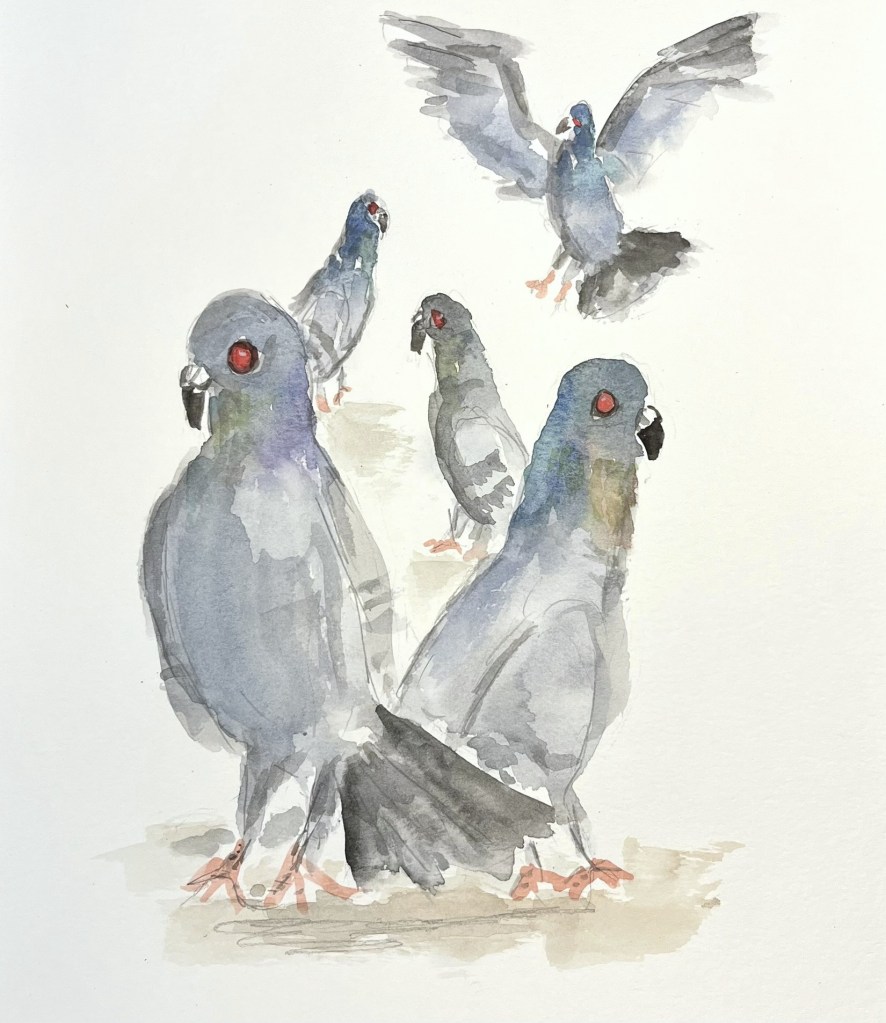
Pigeons (or rock doves, their true ‘wild’ name) are among the most common birds seen in some parts of the world, notably cities. When I head into the city for work, I always walk the paths that take me by some flocks of theses charming avian friends. And while they don’t always have the best reputation, the connection between rock doves and humans is ancient, significant, and important. From their amazing behaviours and intelligence, to their homing nature, the humble pigeon is a bird to be admired.
© Christopher M Buddle 2025
-
Birdology: a review
This is my first book review on this site, and today I want to share some perspectives on a gem of a publication by Montreal’s Carolyne Van Der Meer. Her chapbook “Birdology” was published recently by Cactus Press.
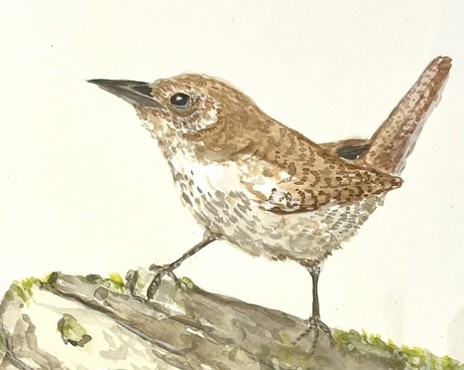
A wren, in watercolour. A bird worthy of watching. This slender book of poetry is about life and loss, and Carolyne shares intimate and authentic moments and emotions about aging parents, love, life and loss. She juxtaposes the ever-present carefree (yet not painless!) birdlife around us with the lives of those we love as their bodies (and perhaps minds) deteriorate.
As someone in my early fifties, I can relate to the sandwich of middle-age. Kids are growing up and leaving home, and parents on the other side whose health will continue to decline. Observing and connecting to nature may help make sense of some of this, or at least provide a respite during difficult times.
Here’s an exert from one of my favourites, Trees:
Lately I have been listening to trees
I can’t help it because that’s where
the birds are and I’ve been listening to
them for longer It took a while to
actually hear the trees or maybe
that’s called paying attention
Indeed, it’s called paying attention. And in the depths of difficult times, sometimes pausing with a cup of coffee to watch birdlife, even if sitting in your car in a parking lot, will bring a moment away from the haze of emotion.
Not long after publishing this Chapbook, Carolyne Van Der Meer’s mother passed away, something she posted on social media. This made my re-read of Birdology even more poignant. Grief, loss, and sadness were already within the poems, and not more ever-present after another death. Yet Carolyne’s poetry is not dark and depressing, it is beautiful and real. It shows us that life is both uplifting and deeply, difficult and bird life is similarly harsh yet mixed with delight.
Birdology II beautifully captures this dichotomy, starting with reminders of the difficult and unknown:
Sometimes we don’t know what awaits us. How suddenly, on a
random day of puddle splashing, there is also a feeling of
bereftness that cannot be contained. A highway pile-up of grief.
And it ends with a reminder of bird’s playfulness:
There was nothing weighing down the sparrows in their puddle,
no sadness that I could discern. They flapped their wings,
flicking the water off their little bodies. And dove in again.

Thank you, Carolyne, for writing these poems and sharing them with the world. So many of us will find these meaningful.
You can go here to buy it: https://www.cactuspresspoetry.com/birdology
© Christopher M Buddle 2025
art, birdology, Birds, book review, Books, grief, poem, poems, poetry, review, Watercolor, Watercolour, writing -
backcountry
summer canoe trip
embracing the wilds
words fail

the river meanders
my thoughts meander
at peace, in nature

beneath the pine trees
at river’s edge
nourishment
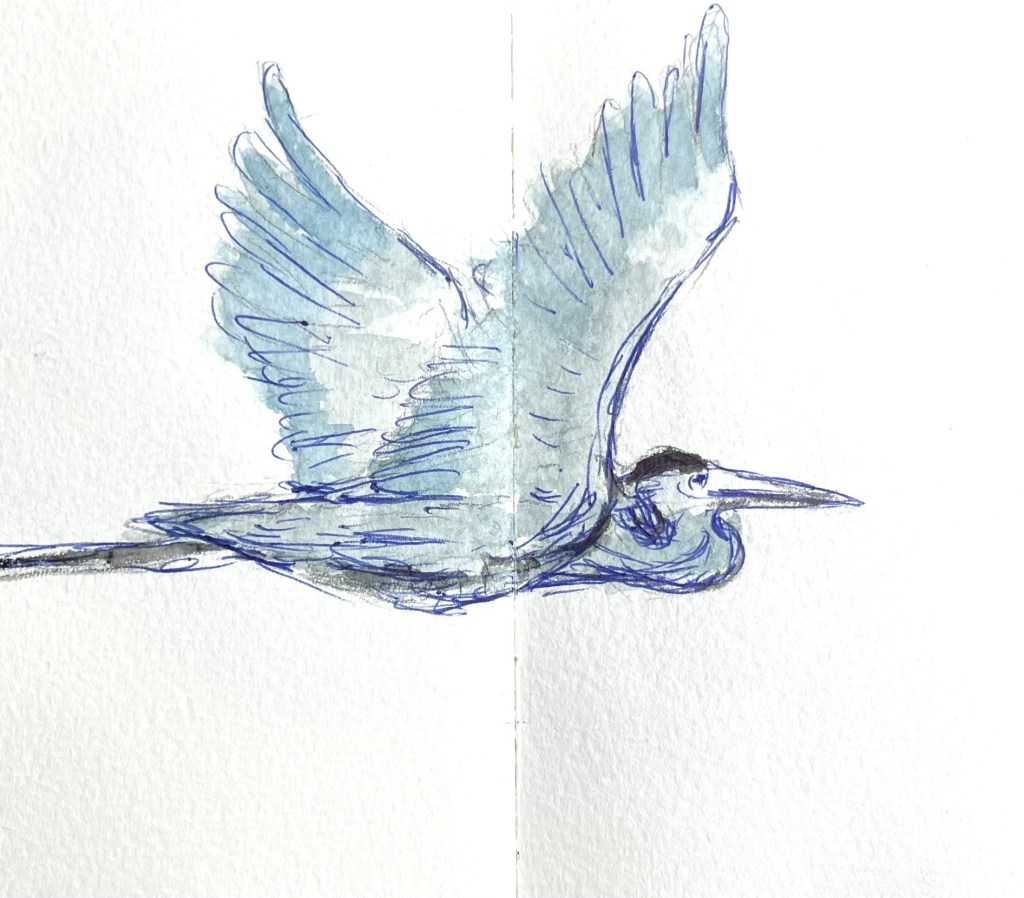
Last week I went on a five day backcountry canoe-camping trip in Algonquin park, with a great friend of mine. He and I had a stellar time – we battled deer flies and long portages, a truly astounding 24 hours of hard rain, and were also blessed with quiet lakes, gentle canyon-paddles, the sounds of loons and frogs in the night, and the beauty of the Canadian wilderness. I feel grateful to be able to experience the wild and wonderful back-country.
As with most adventures, I took a pocket-sized watercolour album, water brushes, and a travel palette, and documented some of what we saw and experienced – a selection of the pages is above.
© Christopher M Buddle 2025
-
Ode to the cottontail
At dusk
Start-stop-start-stop
Tender greens await
—
Ears up!
Twitch, munch, twitch
Watch, wait
—
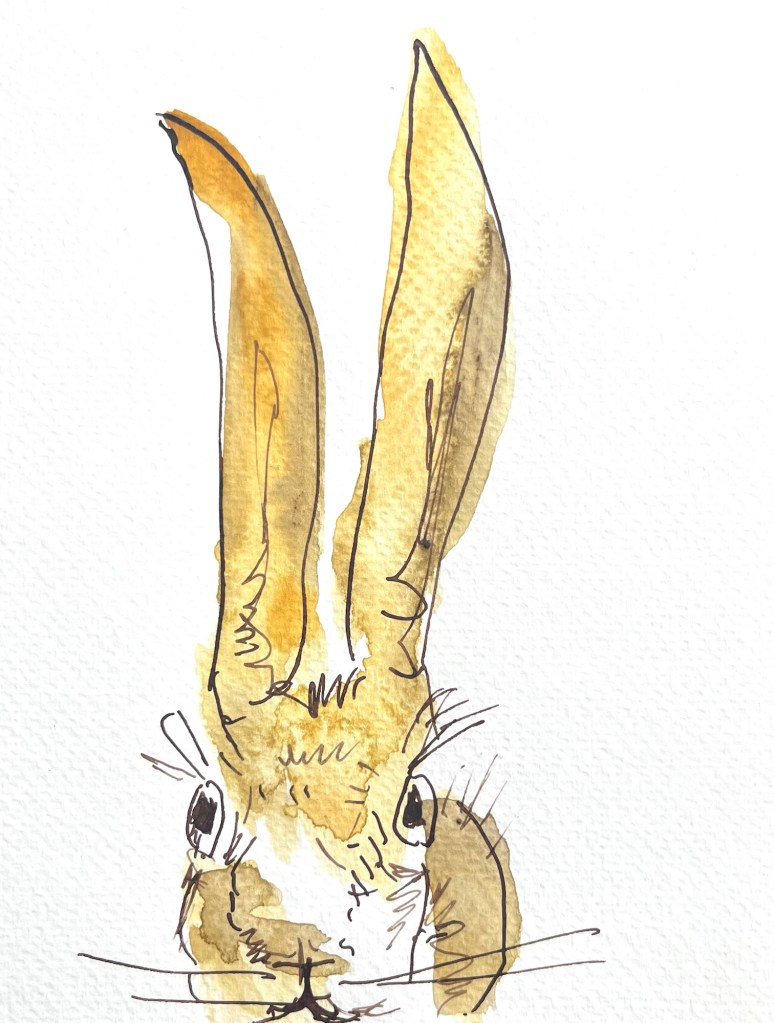
Memories of Hazel, Fiver, and Bigwig
The wars of warrens
Distant fields, sly foxes
—
Tense, freeze, sense
A mad dash to hedgerows
Hop, Hop, Leap
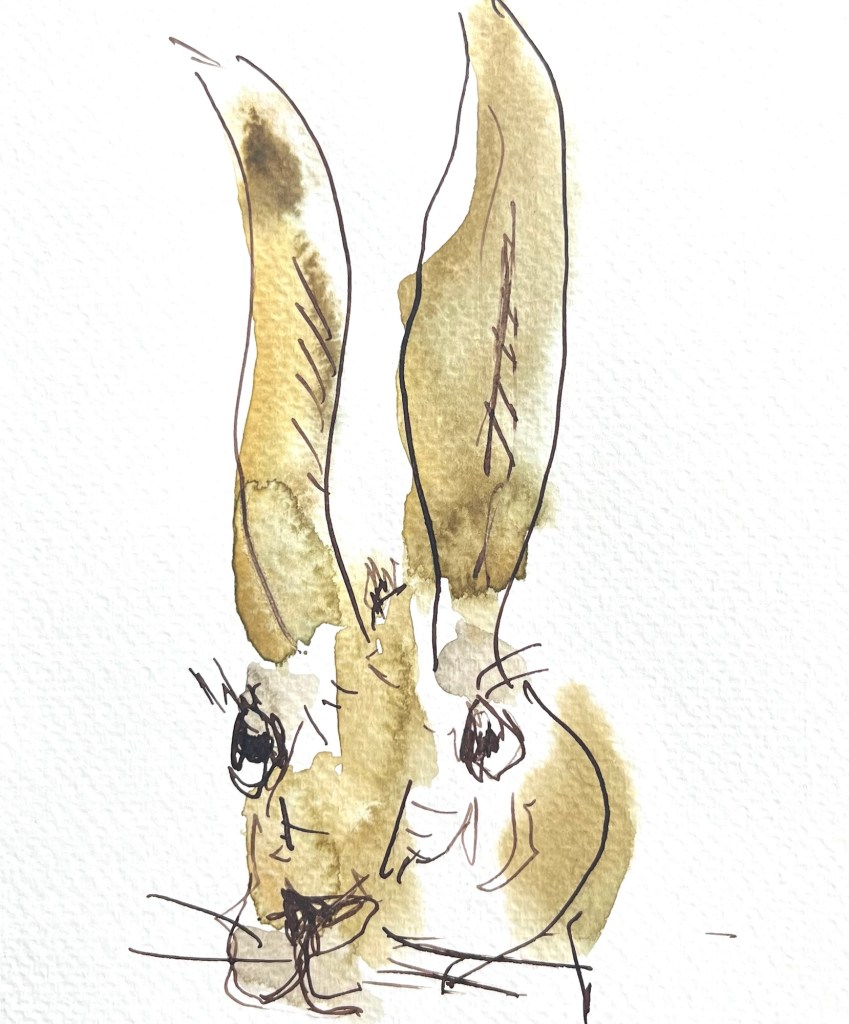
The long night
Shadows under Orion’s gaze
Dancing with moonlight
—
Soft light returns
Garden’s greenery breaks the fast
At dawn
—
© Christopher M Buddle 2025
.
-
Casting
the long cast
dancing over dawn’s still waters
forever moments

In my late 20s I took up fly fishing. Something about casting a fly line appealed to me. This is not to judge other kinds of fishing, but the whirl and dancing of the fly line is deeply satisfying, and catching a fish – even a small one – on a lightweight fly rod is quite exhilarating. It’s been a long time since I went fly fishing.
Earlier this week I dusted off my fly rod and found some flies (‘lures’) and had some fun casting away. My first time out was a disaster – the fly line got caught up in everything, I kept snagging lily pads, and a breeze came up which meant my canoe (which is one without a keel) twirled about.
My second time out was more successful, if one measure fishing success as good casting, calm waters, and the occasional bite. I did pull in a smallmouth bass after a decent fight. I took out the hook, gave the fish a nod, wished it well, and tossed it back into the lake.
It will swim another day; I will fish another day.
I remember now why I love fishing: it’s about the stillness, the waiting, the focus. It is meditation on the water.
art, canoe, casting, drawing, Fish, fishing, fly fishing, lake, meditation, poetry, water, Watercolor, Watercolour
 Nature's Reverie