
In ancient oceans
strange segmented creatures lurk
– learning from fossils

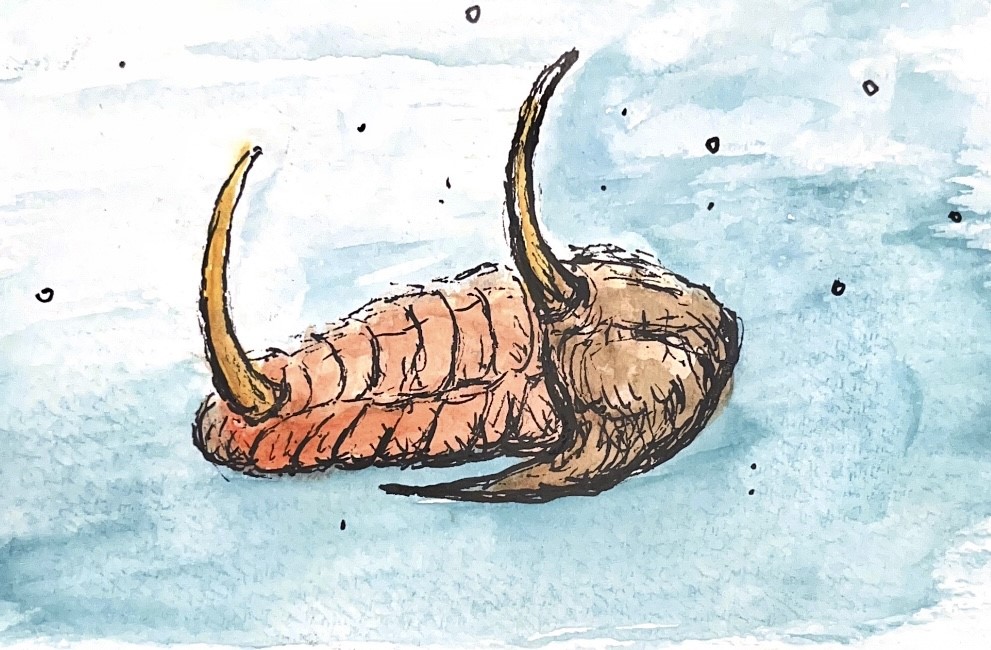
Notes: Earlier this month we did a trip to the Royal Ontario Museum (mainly to see Kent Monkman‘s incredible exhibition, Being Legendary*). But no trip to the ROM is complete without visiting the halls of old things. I am always drawn to Trilobites. These incredible (now extinct) life forms occupied our planet’s marine environments for 270 millions years – which is truly an astounding success story. There are some 22,000 described species of Trilobites, with great diversity in form and size. I have no idea what colour Trilobites were (nobody does…) but I imagine some of them being red or rusty-brown colour. I did the above and below watercolours on a bumpy train ride back to Montreal from Toronto – less than ideal, also because I worked off reference photos. But, better to do the art, than not, I suppose!
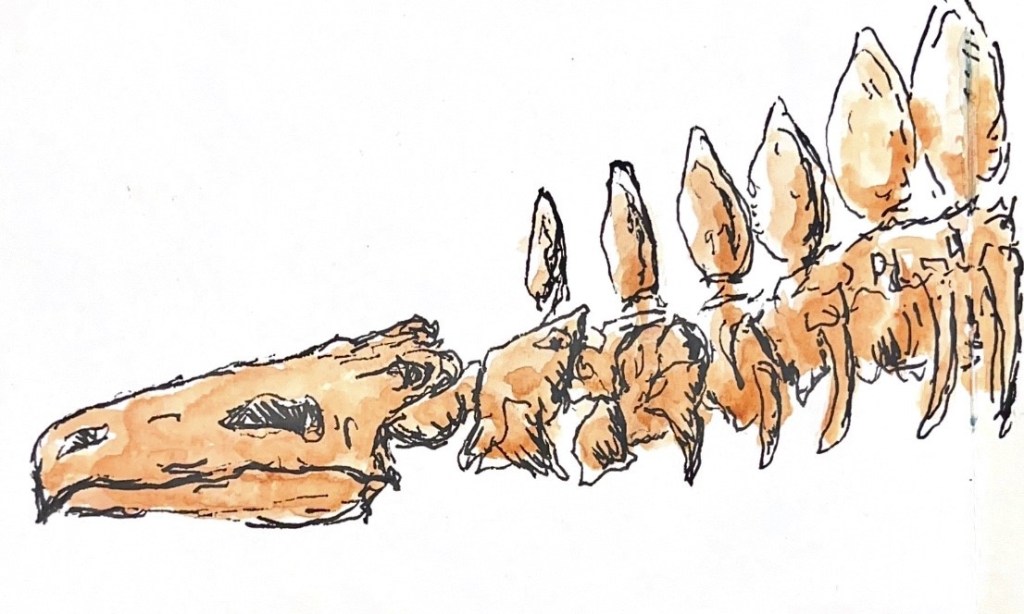
In addition to trilobites, we wandered through the dinosaur exhibits. Seeing the joy and sounds of young people encountering the giant models brings much hope. Natural history is awe-inspiring, and I certainly attribute my own love of natural history to the opportunities I had, as a child, to visit museums and other places that display old things. Old things are important and provide perspectives when we think about and live in a world with lots of new and shiny things.
* part of why indigenous artist Kent Monkman’s work is so powerful at the ROM is because of how it provides a critical assessment of how the stories of old bones, fossils, and other histories are told so often through a colonial lens. Travelling with Miss Chief Eagle Testickle changed my perspective in important and fundamental ways, and is causing me to rethink my relationship with, among other things, natural history and the way natural history is depicted in museums. Learning is good. Let’s do it as much as we can.
© Christopher M Buddle 2023
 Nature's Reverie